

Should You Rent a 15-Yard or 20-Yard Dumpster for Your Project?
A 15-yard dumpster is typically the best choice for smaller home cleanouts, garage decluttering, and minor remodeling projects. A 20-yard dumpster is better suited for larger household cleanouts, construction debris, and extensive renovations. The right dumpster rental size depends on how much waste your project generates, the type of materials being discarded, and available space for delivery.
Choosing the right dumpster size can save time, simplify cleanup, and help you avoid unnecessary rental expenses. At Hiott Trux Waste Removal, we make dumpster rentals straightforward for homeowners, contractors, and businesses. As a locally owned, family-operated company, we take pride in dependable service, competitive rates, and clear communication. Our 15-yard and 20-yard roll-off dumpsters are designed to accommodate everything from weekend decluttering projects to larger renovations. With convenient 24/7 online booking, flexible scheduling, and experienced drivers who take precautions to protect your driveway, we make waste removal one less thing to worry about. Whether you’re preparing to move, renovating your home, or clearing out years of unwanted belongings, our friendly team can help you choose the right dumpster for your project.
Choosing the Right Roll-Off Dumpster Rental for Your Cleanup
Not all cleanup projects generate the same amount of waste. Understanding the differences between a 15-yard and 20-yard dumpster helps you select a container that fits your project without paying for more space than you need.
1. What Is a 15-Yard Dumpster Best Used For?
A 15-yard dumpster rental is ideal for small to medium-sized cleanup projects that generate more waste than regular trash pickup can handle. It provides enough capacity for many residential projects while remaining relatively compact.
A 15-yard dumpster holds approximately 15 cubic yards of material, equivalent to 405 cubic feet of space.
Common projects include:
- Garage cleanouts: Removing old boxes, broken furniture, and unwanted household items.
- Basement or attic decluttering: Clearing accumulated belongings and miscellaneous junk.
- Small remodeling projects: Disposing of cabinets, drywall, flooring, and other approved renovation debris.
- Moving preparations: Getting rid of unwanted furniture and household clutter before relocating.
- DIY home improvements: Managing debris from smaller weekend projects.
Hiott Trux offers 15-yard dumpsters that are approximately 14 feet long with 4-foot-high walls. The lower walls and swinging rear door make loading bulky items more manageable.
Helpful Tip: If you’re cleaning out one or two rooms and don’t expect a large amount of construction debris, a 15-yard dumpster may provide all the space you need.
2. When Should You Choose a 20-Yard Dumpster Instead?
A 20-yard dumpster rental is generally better for larger projects that produce substantial amounts of household junk or construction debris. It offers approximately 33% more volume than a 15-yard dumpster.
With 20 cubic yards of capacity, this container provides 540 cubic feet of space for approved materials.
A 20-yard dumpster is commonly used for:
- Whole-house cleanouts: Removing furniture, clutter, and unwanted belongings from multiple rooms.
- Major remodeling projects: Managing debris from kitchen renovations, flooring replacements, and other home improvements.
- Roofing projects: Disposing of approved roofing shingles and related materials while staying within weight limits.
- Estate cleanouts: Clearing household contents when preparing a property for sale or transfer.
- Construction projects: Keeping drywall, insulation, siding, and other approved debris contained.
Hiott Trux’s 20-yard dumpsters are approximately 14 feet long with walls measuring 6 feet, 1 inch high. Like the 15-yard option, the container features a swinging rear door for easier loading.
Helpful Tip: If you’re deciding between two sizes and expect additional debris as your project progresses, consider the larger dumpster. Just remember that extra capacity does not increase the permitted weight limit.
3. How Do You Estimate the Dumpster Size You Need?
The easiest way to estimate dumpster size is to consider the volume, weight, and type of materials you plan to discard. A dumpster that is too small may require another rental, while one that is unnecessarily large could increase your upfront costs.
Start by evaluating these three factors:
Project Size
Think about how much of your property you’re clearing. A single-room cleanout usually generates less waste than an entire household renovation.
Material Type
Lightweight items, such as furniture, boxes, and household clutter, occupy space differently than heavy construction materials. Roofing shingles, drywall, and demolition debris can reach weight limits before the dumpster is full.
Available Space
Make sure your driveway or designated delivery area has enough room for the container and the truck delivering it.
According to the U.S. Environmental Protection Agency (EPA), the United States generated approximately 600 million tons of construction and demolition debris in 2018, more than twice the amount of municipal solid waste generated that year. This highlights how quickly renovation and demolition materials can accumulate.
For projects involving construction debris, planning your waste disposal needs ahead of time can help prevent interruptions.
Helpful Tip: Make a list of the largest items you plan to discard before booking. Sharing that information with your dumpster rental provider can help you choose an appropriate size.
4. What Can You Put in a Residential Dumpster Rental?
Most residential dumpster rentals accommodate common household junk, furniture, and approved construction debris. However, some materials are prohibited or require additional disposal fees.
Hiott Trux Waste Removal accepts many common materials, including:
- Household trash and unwanted furniture
- Metal and approved appliances
- Roofing shingles
- Drywall, sheetrock, and insulation
- Siding and flooring materials
- Carpeting
- Approved demolition debris
- Yard waste, with prior confirmation
Certain materials are not permitted in Hiott Trux dumpsters, including stone, brick, asphalt, concrete, flammable waste, liquid waste, hazardous waste, and poisons.
Additional charges may apply to mattresses, televisions, air conditioners, and tires.
Before loading your dumpster, confirm any restrictions or special disposal requirements. Keeping prohibited materials out of the container helps avoid additional costs and disposal complications.
Helpful Tip: Never fill a roll-off dumpster above its top edge. Overfilled containers can create transportation hazards and may need to be unloaded before pickup.
5. How Can You Prepare for Dumpster Delivery?
Preparing your property before delivery helps ensure your dumpster can be placed safely and conveniently. A few simple steps can make loading easier and reduce the risk of property damage.
Before your scheduled delivery:
- Choose a level location. Select an accessible driveway or approved area with enough room for the container.
- Clear the delivery path. Move vehicles, equipment, and other obstacles out of the way.
- Check overhead clearance. Watch for low-hanging tree branches, wires, and other obstructions.
- Plan your loading strategy. Place heavier materials carefully and distribute weight evenly.
- Confirm your rental details. Review the rental period, included weight allowance, and any additional fees.
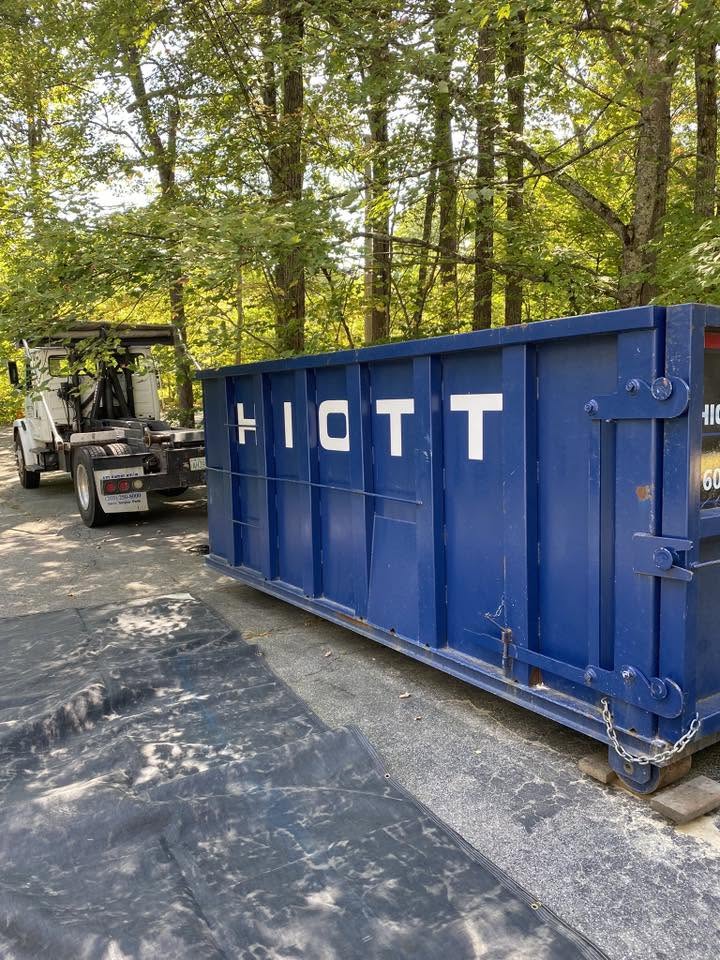
At Hiott Trux Waste Removal, driveway protection is a priority. Our drivers place wood blocks beneath dumpsters delivered onto asphalt to help distribute weight and reduce the risk of damage.
This is particularly important when disposing of heavy materials such as roofing shingles or construction debris.
Our convenient 24/7 online booking system also allows customers to request a dumpster rental whenever it fits their schedule. A member of our office then confirms the rental date.
Frequently Asked Questions About Dumpster Rentals
Is a 15-Yard Dumpster Big Enough for a House Cleanout?
A 15-yard dumpster can accommodate many smaller household cleanouts, including garages, basements, and individual rooms. For a whole-house cleanout or projects involving large furniture and substantial clutter, a 20-yard dumpster may be more appropriate.
How Much More Can a 20-Yard Dumpster Hold Than a 15-Yard Dumpster?
A 20-yard dumpster provides five additional cubic yards of space, approximately 33% more volume than a 15-yard dumpster. However, each rental has its own weight allowance, so additional space does not necessarily mean you can dispose of heavier loads.
How Long Can You Keep a Roll-Off Dumpster?
Rental periods vary by company and agreement. Hiott Trux has advertised seven-day rental periods for its standard 15-yard and 20-yard dumpsters, with additional daily charges for extensions. Confirm current terms when scheduling.
Can You Put a Dumpster on Your Driveway?
Yes, dumpsters can often be placed on residential driveways when sufficient space and safe access are available. Hiott Trux uses wood blocks underneath dumpsters placed on asphalt to help protect the driveway surface. Placement requirements should be confirmed before delivery.
Ready to Rent the Right Dumpster? Contact Hiott Trux Today!
Whether you’re cleaning out your garage, preparing for a move, or tackling a major renovation, choosing the right dumpster can make your project easier from start to finish.
At Hiott Trux Waste Removal, we offer dependable 15-yard and 20-yard dumpster rentals, convenient online booking, and friendly customer service to help keep your cleanup on track.
Not sure which dumpster size you need? Contact Hiott Trux Waste Removal today! Our team is happy to help you find the right rental option for your project.
You chuck it, we truck it!